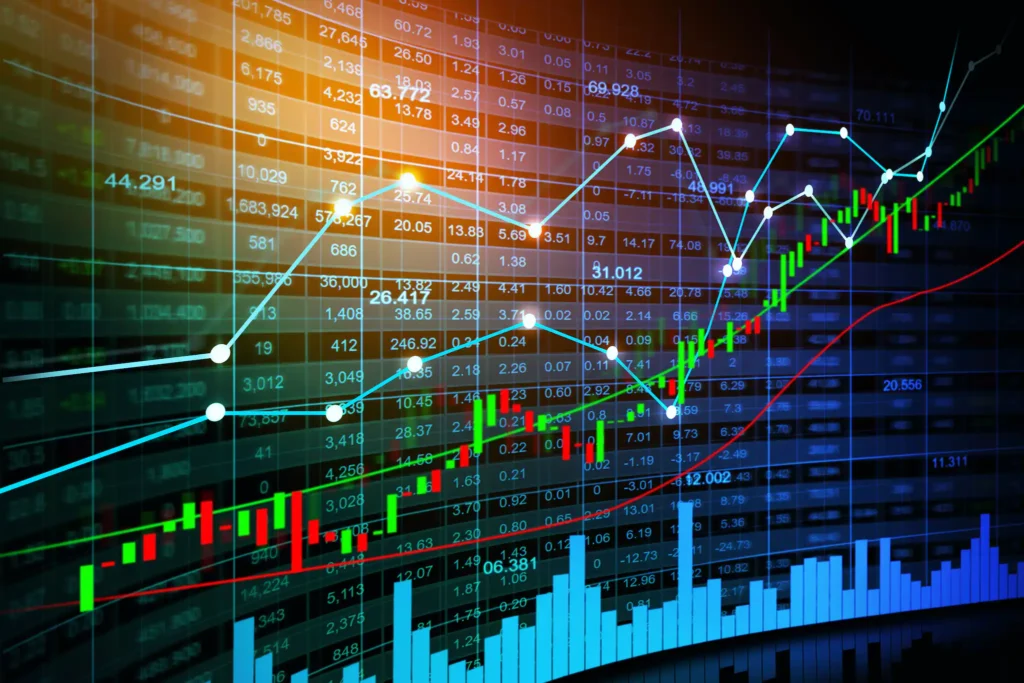
If you’ve ever stared at a candlestick chart long enough to feel like you were watching encrypted messages from the future, congratulations, you’re a trader. But there’s a difference between hoping the market will move in your favor and actually modeling its likely behavior. That’s where forecasting models come in.
This isn’t magic. It’s not fortune-telling. It’s data, probability, and structure, all working to give you a fighting chance in the wildly unpredictable world of online trading. And if you’re using Binomo trading account, a platform built for speed and clarity, forecasting models can help you sharpen your trades with a lot more confidence than just following your gut.
Let’s break it down.
What Is a Forecasting Model, Really?
At the simplest level, a forecasting model is a method (or algorithm) used to predict future price movements based on historical data. Sounds fancy, right? But it can be as basic as drawing trendlines on a chart, or as complex as training an AI to recognize volatility clusters.
Some models look at price patterns. Others focus on indicators like moving averages, RSI, or Bollinger Bands. Some traders even build statistical models using regression analysis or time-series decomposition.
The common thread? All of them are trying to map probability to future outcomes.
And no, they’re not flawless. They don’t predict the future. They forecast it, like a weather report for your next move.
Why Should You Care on a Platform Like Binomo?
Because speed and clarity matter. Binomo allows traders to make short-term decisions on a clean interface with real-time data. That’s an ideal setup for testing and executing forecast-based strategies.
For example, if your forecasting model tells you that a breakout is likely within the next five 1-minute candles, you don’t want to fumble through a cluttered UI. Binomo stripped-down dashboard gives you the visibility and responsiveness you need to act when the signal hits.
Forecasting also lets you stop reacting emotionally. You’re no longer chasing the price. You’re following a pre-built, tested expectation. That psychological edge alone can separate winning traders from those burning out.
Common Types of Forecasting Models Traders Use
Let’s name some names. Here are a few models that many Binomo users quietly rely on:
- Moving Average Crossovers: Not just for beginners. These help forecast changes in momentum.
- Mean Reversion Models: Predicated on the idea that prices will eventually return to their mean. Very helpful for a variety of markets. Consider exponential smoothing or ARIMA when forecasting time series.
Yes, it is advanced, but it is also powerful.
Recognizing recurring patterns, such as triangles, flags, or double tops, is known as pattern recognition. Machine learning-based forecasting is the process of learning from enormous volumes of historical data using neural nets or decision trees. Some traders vouch for them. Others build hybrids. And the smart ones keep testing and refining.
Forecasting isn’t static. Markets evolve. So should your models.
The Danger of Blind Faith
Here’s where people go wrong: they treat forecasting models like crystal balls. They get one win, then start over-leveraging. Or worse, they treat a model’s prediction as gospel, even when conditions scream otherwise.
No model is right all the time. Even the most sophisticated systems break when markets go haywire. That’s why context is key.
When you’re trading on Binomo, think of forecasting models as guides, not gods. They help you tilt the odds. But you still have to think, adjust, and yes, sometimes sit out.
How to Start Building a Simple Forecasting Framework
- Pick Your Market: Start with one asset on Binomo trading account. Maybe EUR/USD or BTC.
- Choose a Time Frame: 1-minute, 5-minute, or longer, depends on your style.
- Utilize moving averages, RSI, and recent highs and lows to monitor important metrics.
- Backtest: Examine your forecast’s performance against historical data, either manually or with a tool.
Don’t demand perfection; instead, adapt and observe. Pay attention to uniformity. Above all, keep track of your trades. Make a note of what your model missed, what worked, and what didn’t. That’s how forecasting evolves. That’s how you grow.
Forecasting Isn’t About Certainty, It’s About Preparedness
If you’re trading without a model, you’re gambling, plain and simple. And while we all take risks in trading, smart traders take informed risks. That’s the difference between guessing and anticipating.
Platforms like Binomo give you the tools to execute fast. But strategy starts with thought. Modeling your expectations can give you the edge you’ve been missing, whether you’re scalping the charts or riding a multi-candle trend.
Think you’re ready to stop guessing and start anticipating? Open Binomo now and put forecasting models to the test. Build, tweak, test, repeat. Because trading doesn’t reward luck, it rewards those who plan ahead.